MITSUBISHI HA33NCB-S Servo Motor 1PC
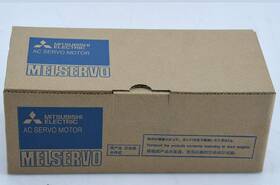
( Brand: Mitsubishi ), ( Manufacturer Part Number: HA33NCB-S ), ( Part Type: Servo Motor ), ( Country Of Origin: China )
Review MITSUBISHI 1pc New Servo Motor
The Mitsubishi HA33NCB-S servo motor is a versatile and high-performance actuator designed for various automation applications. This servo motor showcases Mitsubishi Electric's advanced technology and commitment to delivering reliable and efficient solutions.
The HA33NCB-S is a compact servo motor with a flange mounting size of 120 mm, making it suitable for space-constrained installations. It boasts a continuous power rating of 33 W and a maximum torque of 1.3 Nm, enabling it to handle demanding loads with ease. This servo motor operates on a 3-phase AC power supply with a voltage range of 200 to 400 V and a frequency of 50 to 60 Hz.
One of the standout features of the Mitsubishi HA33NCB-S servo motor is its high-resolution encoder, which provides accurate position feedback with a resolution of 2048 pulses per revolution. This ensures precise control and repeatability, making it an excellent choice for applications requiring high positioning accuracy.
The HA33NCB-S servo motor is equipped with Mitsubishi Electric's advanced vector control technology, enabling it to achieve high torque and energy-efficient operation. This technology also ensures excellent response and stability, even during dynamic load changes.
The servo motor's robust design is built to withstand harsh operating environments, featuring a sealed IP65 rating to protect against dust and water intrusion. It also incorporates a thermal protection function to prevent overheating and ensure reliable operation.
Mitsubishi Electric's HA33NCB-S servo motor is compatible with a wide range of control systems and can be easily integrated into various automation applications using the available connectors and communication interfaces, including CANopen, Ethernet IP, and Modbus TCP/RTU.
In summary, the Mitsubishi HA33NCB-S servo motor is a powerful and efficient actuator offering high torque, precise positioning, and robust design for various automation applications. Its compatibility with various control systems and communication interfaces makes it a versatile and flexible choice for a wide range of industries and applications.
Mitsubishi HA33NCB-S Servo Motor: A Comprehensive Analysis
The Mitsubishi HA33NCB-S servo motor is a popular choice for various automation applications due to its robust design and high performance. In this analysis, we will discuss the key features, advantages, disadvantages, and a concluding recommendation.
Features:1. Compact and lightweight design
2. High torque output
3. Wide speed range
4. High-precision control
5. Built-in encoder for position feedback
Advantages:1. High torque output allows for precise motion control in heavy load applications.
2. Wide speed range ensures versatility in various automation projects.
3. High-precision control results in accurate positioning and repeatability.
4. Built-in encoder provides real-time position feedback for closed-loop control.
5. Compact and lightweight design allows for easier integration into various systems.
Disadvantages:1. Higher price point compared to some other servo motors in the market.
2. May require additional components (such as amplifiers or power supplies) for operation, increasing overall system cost.
Conclusion:The Mitsubishi HA33NCB-S servo motor offers several advantages, including high torque output, wide speed range, high-precision control, and a built-in encoder. These features make it well-suited for various automation applications, especially those requiring heavy load handling or high-precision positioning. However, its higher price point and the need for additional components may be disadvantages for some users.
Recommendation:If your automation project requires high torque, precise motion control, and the ability to handle heavy loads, the Mitsubishi HA33NCB-S servo motor is an excellent choice. Its built-in encoder and high-precision control further enhance its appeal for applications where accurate positioning and repeatability are essential. Consider the additional cost of required components when evaluating the overall system cost.
Details:
part #: ha33ncb prices
- $1100.00-$2058.49
specifications timerrelatime:
- brand: Mitsubishi
- mpn: Ha33ncb-s
- part type: Servo Motor
- country of origin: China
general timerrelatime:
- PLCs HMIs > PLC Peripheral Modules > Timer Modules
- condition: New
returns timerrelatime:
- policy: Returns Accepted
- paid by: Buyer
- method: Money back
- time: 30 Days
payments timerrelatime:
- wallet: Google-pay
- credit card: Diners-club
- other
shipping timerrelatime:
- service: Standard
- cost: $0.00
- transit: 6-12 Days
- class: Standard
- type: Fixed
seller timerrelatime:
- # reviews: 103
- rating: 100.0%
- city: Perth Amboy, New Jersey
offer timerrelatime:
- best offers: True
- options: Ship-to-home
- availability: In Stock
- sold: 0
- started: April 2, 2026
- quantity: 3
Mitsubishi HA33NCB Is Similar To:
- Drs-n2b10 Mitsubishi Solid State Timer Sec New Old Stock (43.8% similar) This unit is new old stock without the original box...(February 7th, 2019)
- Fx-1hc Mitsubishi Plc New In Box High Speed Counter Fxihc (43.3% similar) Comes with instructions as pictured. Up for sale is a new in factory box Mitsubishi high speed counter part number FX-1HC...(April 1st, 2018)
- Hc-mf43b Mitsubishi Servo Motor (62% similar) The motor shaft is in good condition. 8 maximum speed r min: 4500 functional condition: this servo motor is guaranteed to be fully. Shipping charges seem too high. Torque NM: ,000S of new and used business industrial assets available each month. Mitsubishi HC-MF43B servo motor: this listing is for a...(March 5th, 2018)
- Hf-kp43k Mitsubishi Ac Servo Motor (64.9% similar) New feel free to ask questions...(August 13th, 2017)
- Srs-hnps Mitsubishi New Solid State Timer Module (47.7% similar) New Mitsubishi Sr's-hips solid state timer module, 200-240VAC...(August 8th, 2021)
- Mitsubishi Cm400dy-24a 1pcs New Cm400dy24a Igbt Module (51.1% similar) 1PCS new fest FRC-1/2-D-MIDI 159590 original. 1PCS tonics CT6S-1P2 counter CT6S1P2 new. Original 1PCS new fly gt ENM-10 5828804-20M blue bulb type level switch 20M. All our pictures are real product images. The rheumatism caused by monitor is not include the quality problem. It isn counted into ...(December 13th, 2024)
- Mitsubishi M132-m133 New Set 305mm Wire Edm Upper And Lower Guide M132 M133 (41.4% similar) New set .305MM wire edm upper lower guide M132 M133 Mitsubishi...(July 23rd, 2025)
- Mitsubishi Ha-ff43cb-ue 1pc New Ac Servo Motor (86% similar) Part #: Mitsubishi HA-FF43CB-UE for sale...(April 1st, 2026)
- Mitsubishi Ha-ff63c-s5 New Ac Servo Motor Haff63cs5 (72.5% similar) Part #: Mitsubishi HA-FF63C-S5 for sale...(April 1st, 2026)
- Mitsubishi Hf-h104s 1pc New Servo Motor (86.1% similar) Part #: Mitsubishi HF-H104S for sale...(April 1st, 2026)
- Mitsubishi Hc-sf201 1pc Brand New (63% similar) Part #: Mitsubishi HC-SF201 for sale...(April 1st, 2026)
